Weather data is more abundant than ever — forecasts, radar, alerts, models, sensors, and derived datasets – often all available in your phone. But more information doesn’t automatically lead to better decisions. Many organizations still struggle to turn weather data into meaningful action.
That’s because not all weather data is actionable.
Actionable weather data goes beyond describing what’s happening in the atmosphere. It helps decision-makers understand what it means, what to do, and when to act. Here’s what separates raw weather data from the kind of weather intelligence that truly drives outcomes.
Actionable Weather Data Is About Context, Not Just Conditions
A forecast alone doesn’t answer the crucial operational question: “What does this mean for my operations?”
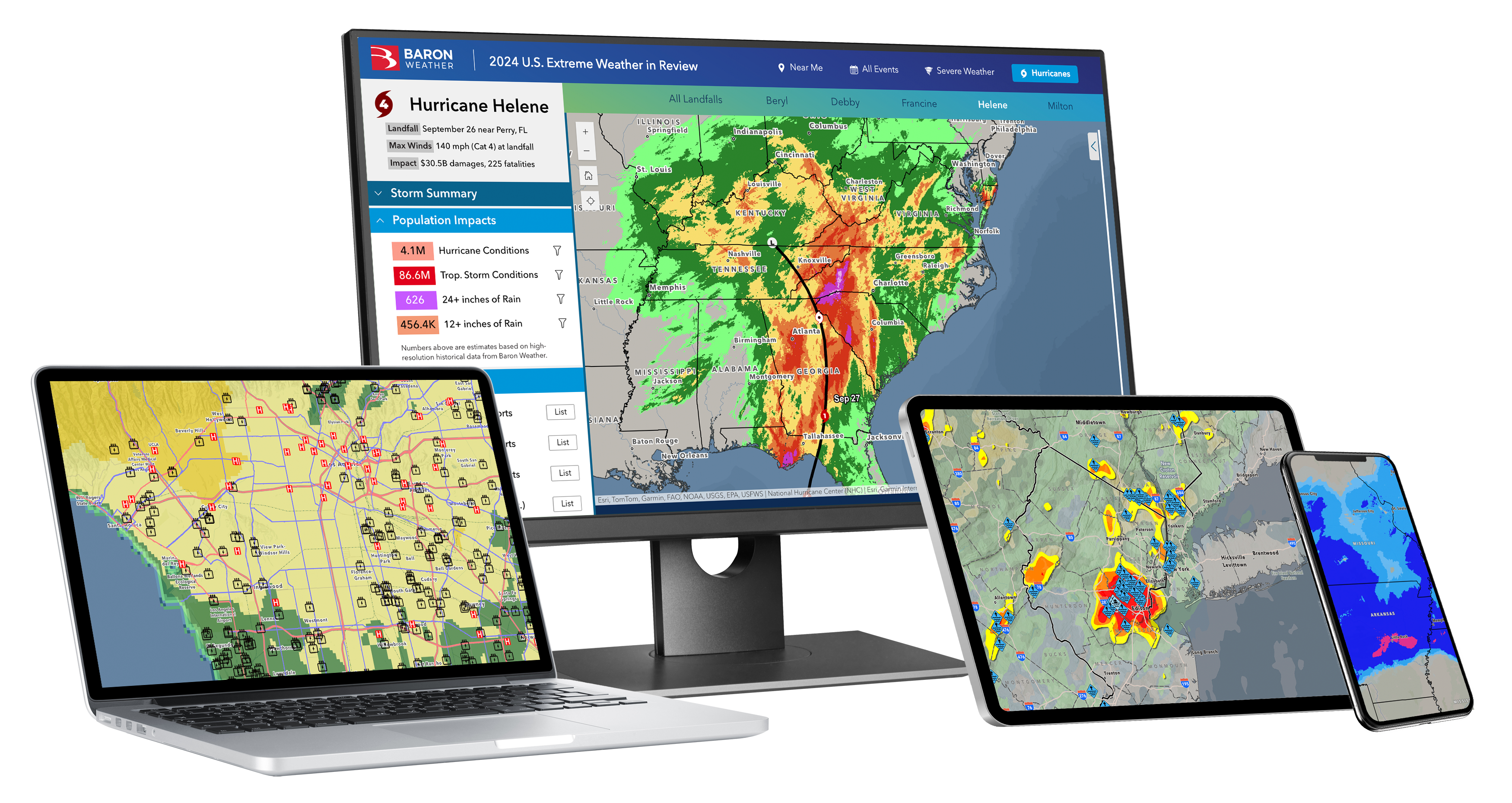
For example, when weather intelligence is layered into GIS, the same storm can look very different depending on what’s in its path. Baron’s ArcGIS-ready weather layers help teams view hazards alongside assets and communities, making it easier to understand where impacts are most likely and which locations need attention first.
Actionable weather data provides this context by connecting conditions to the assets involved, the thresholds that matter, and the consequences of crossing them.
Timeliness and Latency Shape Decision Outcomes
The highest-resolution data has limited value if it arrives too late to act on. Actionable weather data prioritizes:
- Early warning signals before impacts develop
- Frequent updates that reflect rapid changes
- Low-latency processing and delivery
- Clear indication of decision windows
Timeliness is especially critical during fast-evolving storms. Free radar data is often cluttered or degraded, updates only every 15 minutes, and is prone to outages during periods of high demand — making it difficult to track rapid changes as they occur. Baron’s High-Res North American Radar eliminates clutter and delivers one of the highest-resolution composite radar views in the industry, updating every two minutes across the United States, Canada, and Mexico. These rapid, high-clarity updates reveal shifts in storm motion and intensity much sooner than traditional sources, giving teams more lead time as conditions evolve.
From Awareness to Action: The Difference That Matters
Raw weather variables don’t always translate into clear decisions. Actionable data bridges that gap by connecting conditions to operational thresholds and triggers — whether that’s dispatching crews when winds exceed a certain speed or issuing alerts tied to real-world criteria that matter to an organization’s mission. When thresholds are clearly defined, weather insight becomes a practical tool for maintaining continuity during disruptive events, reducing uncertainty and operational risk, allocating crews and equipment proactively, communicating with stakeholders, and improving overall resilience.
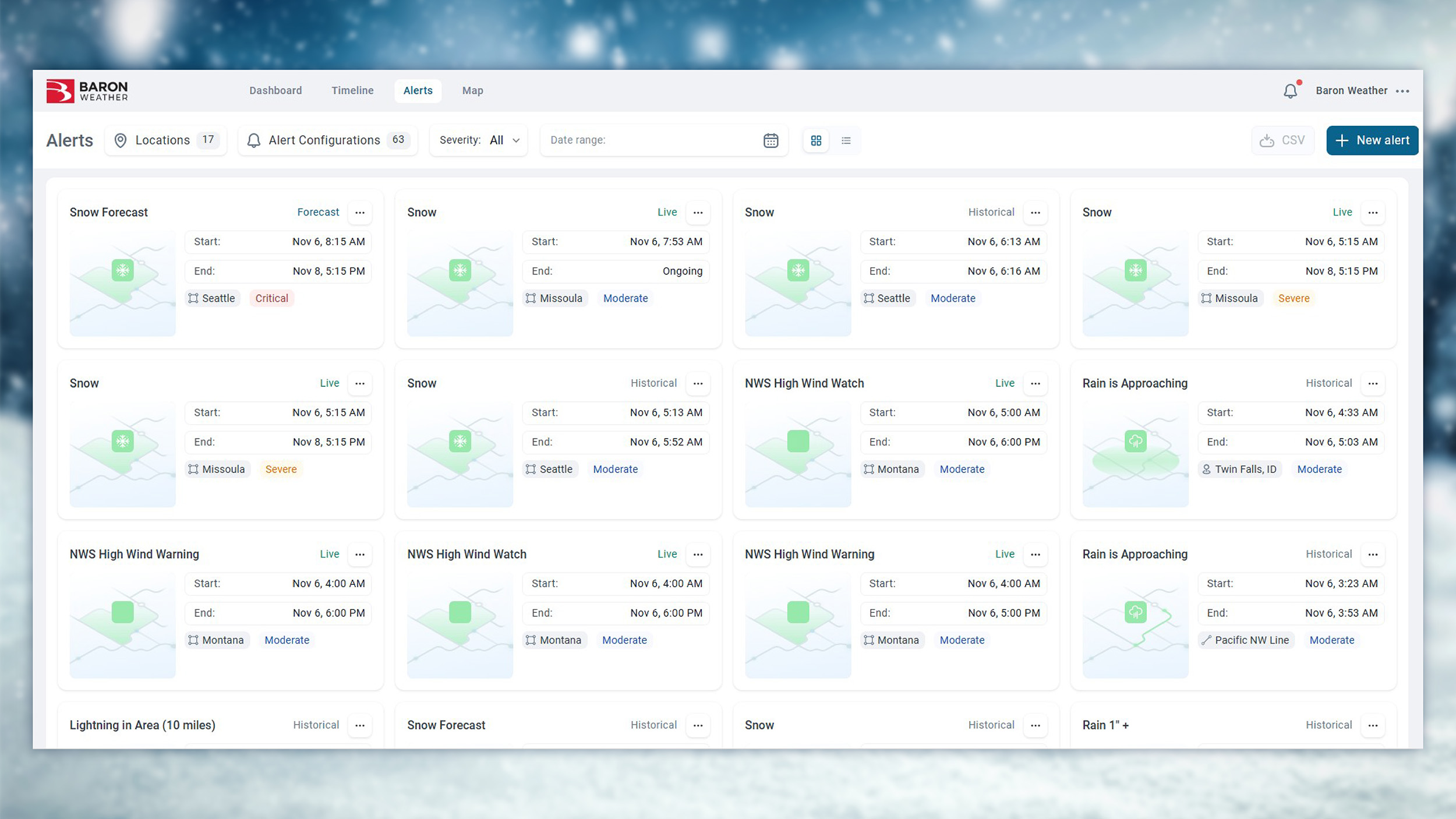
This is where automated decision support becomes critical. Baron’s Weather Logic applies organization-specific thresholds to trigger targeted alerts, notifying the right teams when conditions approach decision points rather than sending constant, generic notifications. It doesn’t overwhelm users with information; it delivers the right insight, at the right time, in the right format.
Integration Makes Data Truly Actionable
Weather data doesn’t become actionable by sitting in a dashboard. It becomes actionable when it fits naturally into the systems teams already use. Our data and solutions integrate into:
- GIS environments
- Operational platforms and internal tools
- Asset management or control room systems
- Automated alerting and communication workflows
For teams that need weather embedded directly into operations, Baron APIs deliver curated datasets into existing tools and dashboards, ensuring weather intelligence moves through the same workflows as other operational data. By placing insight where decisions occur, weather information becomes part of the decision process, not an extra step.
Trust Drives Action
Decision-makers must trust the insight behind the data. When teams trust the insight, they act earlier and with greater alignment. Actionable weather data is supported by:
- Transparent methodology
- Consistent performance
- Model blending and probabilistic guidance
- Expert analysis during high-impact or uncertain events
Trust increases when the data is consistent and supported. Baron’s approach combines high-quality datasets with expert meteorological oversight, helping teams make decisions with greater confidence, especially during high-impact or uncertain events.
The Value from Data to Decisions
Actionable weather data is the foundation of weather intelligence. When insight is contextual, timely, integrated, and aligned to real-world decisions, it becomes a powerful tool for managing risk, protecting assets, and maintaining continuity.
As organizations face increasing weather variability and operational complexity, the ability to turn forecasts into foresight is no longer optional — it’s essential.
Weather data alone creates awareness. Actionable weather data drives action. Baron offers weather data, software solutions, and data integrations into respected platforms to ensure you can easily integrate actionable weather data into your operations.
Explore the full step-by-step process in The Complete Guide to Weather Intelligence.